Golden Age
For five hundred years after Yavanjatakam, we see a plethora of informative astronomical, mathematical and astrological texts. This was the golden age of not only Vedic astrology but for the sciences of astronomy and astrophysics. Below are some of the major people and books that contributed a big deal to this golden age. While immensely interesting, it is not a a thorough list or a thorough writings on each section. While wanting to let the readers know of these works, it is not my aim to write a lot about each of them for sake of succinctness. If any of you want more information about any of these, please let me know in comments and I’ll write separate articles.
Varahmihir
Varahmihir (c. 505 to c. 587 CE) is referred to as the “Father of Vedic astrology”. Varahmihir is credited with normalizing the twelve signs – twelve houses – twelve planets format of Vedic astrology. The Greek influence crystalized into and amalgamated into Vedic astrology by the time Varahmihir breathed his last. He was fluent in Greek and held the Greeks in high regard. Indology scholars point out Varahmihir as an important inflection point for Hellenistic influences on a lot of things, one of them being Astrology.
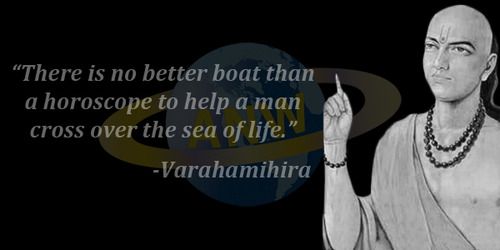
His Brihatjatakam is one of the most complete compilation of Vedic astrology rules. It is to this day, considered the foremost text of Vedic astrology. Assignment of houses with some aspect of life first appears in Brihatjatakam. Following him, his son Prithuyasas continued his work with a supplemental book Hora Sara. Hora Sara is known for it’s detailed explanations of the 4th and 10th houses.
Brihat Parashar Hora Shastra (Last edition c. 750 CE)
Writing about Vedic astrology would be amiss without mentioning this book. Clouded in deep mystery about it’s origin, this book was more a collection of previous knowledge. It is traditionally attributed to be started by the mythical sage Parashar but has been frequently added upon. The latest addition to BPHS references texts by Varahamir. It is frequently thought to be the collective wisdom of number of scholars over 2000 years. It is a must read for any student of Vedic astrology. Astrologers are frequently spotted quoting BPHS for it’s easy, lucid and non coded predictions.
Saravali (c. 800 CE)
Following BPHS, we see another anthology being published by the King Kalyan Varma. It is thought to be a compilation of various Vedic astrology scholars up to that point in time. The structure of the book reveals it’s history. Saravali is unique in it’s giant list of predictions.
Phaladeepika (c. 13th century)
Phaladeepika by Mantreshwar while technically beyond the purported golden age is another radical work on Vedic astrology. It is known for it’s ground breaking work on retrograde planets and their relation of the sign in which they are. It is in direct contrast to earlier works. This is a relatively shorter book than others mentioned before. If someone is interested in reading an ancient Vedic book, this would be a prime candidate to start with.
Uttarakalmitram (c. 17th century)
Uttarakalmitram is another post golden age work. It is simple compilation mainly based on pre Phaladeepika principles. This is another book for an easy read for a beginner.
Decline
Towards the the end of 13th century, most of India was ruled by various Muslim dynasties originally from what is currently Afghanistan/Iran. To varying degrees these rulers clamped down on Hinduism. Astrology in particular took a hit as a divination art, was considered especially evil. This is also the same time, Hinduism itself was getting very rigid in its caste structure. Brahmins, the original caretakers of ancient knowledge, slowly started becoming insular. Instead of spreading this knowledge, they tried to hoard this knowledge from the general populace. This is the time when most of northern India has started developing new regional languages (derivates of Sanskrit). Sanskrit is not the main language of day-to-day transactions. All of these books written in Sanskrit slowly become inaccessible, confined to the Sanskrit reading Brahmin community. Towards the end of 16th century we see a complete decline in any new ideas of Vedic astrology. Following Uttarakalmitram, there is no new interest or rethinking in Vedic astrology. Immediately following the collapse of Mughal Empire, Hinduism saw a reemergence but unfortunately there was no corelating Vedic astrology interest in this brief post Mughal – Pre British rule. For the next two hundred years, the British Raj had direct or indirect control of most of India. While the British themselves tried to not interfere in the religions of the sub continent, they also tried to impose western white-centric education on Indians. Hinduism as whole was portrayed as an ancient, barbaric practice that can be tolerated but definitely was not to be encouraged. All through these times, Vedic astrology while stagnant was consistently practiced. The priests still made charts, they still fixed marriages, they predicted future events but they were relegated to a vernacular, non elite positions. Vedic astrology (Like broader Hinduism) survived but lost it’s respected position. Through foreign invaders and selfish pedagogues , it had lost the light which it was named after.
Revival
In short, India’s independence was the pivotal event that allowed a revival of Vedic astrology. Even before India’s independence from Britain, various Indology scholars (Both ethnic Indians and western) had started to show interest in Vedic astrology. Though clouded in orientalism and exoticism, a lot of western Indologist were recognizing the ancient Indian works in astronomy, mathematics, sciences etc.
During the early part of the 20th century, we see books being published that collate and reframe the ancient texts for a rapidly modernizing world. The Lal Kitab was formally published in 1939 but was in use in some form since 1898. This is a very modern view on the concepts and references which were now more than a thousand years old.
But it is the independence from Britain in 1947 which is the focal point of an explosion in research. This period also corelated with a reemergence of astrology in the west. During this time, interest in India and ancient Indian culture also sees an increase by both ethnic Indians themselves and by westerners. National pride in ancestors achievements take focus in an India emerging from colonialism. Daily horoscopes in newspapers popularized astrology in general. Towards the end of 20th century, the internet equalized the world. What was once the purview of a select few became available for everyone. It is now a growing field with people contributing to it from all over the world. Hundreds of books and millions of videos are now available devoted to this art of divination.
Right now Vedic astrology is for everyone. It is no longer just for Indians, it is a human art. Anyone, irrespective of their origins or location can benefit from this art. Modern computers allow chart calculations to be done in seconds for anyone born anywhere on the earth. Today’s Vedic astrologers adapt to this ever changing world. We see the past scriptures and focus them to the present. We bring Varahmihir to the digital age and see people’s future. We as Vedic astrologers, stand on the shoulders of who came before us and we shine this light for all to see into their futures.

 MicroJyotishi